

Your Professional Organic Phosphonate Scale and Corrosion Inhibitors Supplier!
Shandong Keyu Water Treatment Co., Ltd. is a high-tech enterprise specializing in the research, development, design, production and sales of water treatment related products. It was originally established as Zibo Keyu Chemical Co., Ltd. in 2002 and has registered and established itself as a reliable professional water treatment agent supplier in China's water treatment field. Its products are widely applied in industries such as power, petrochemicals, steel, textiles, papermaking, dyeing and printing, mineral processing, and central air conditioning.


Why Choose Us
Advanced Equipment
The company boasts strong technical capabilities, supported by hardware facilities such as routine analysis laboratories, With modern production facilities and an annual production capacity of 10,000 tons, we maintain stable product supply and consistent quality.
Professional Team
We have dozens of professional water treatment technicians, and we also employ professors from major universities and water treatment professionals from Qilu Petrochemical as technical consultants. These technicians possess years, capable of providing technical support and resolving problems for customers in various fields.
Our Certifications
The company has passed safety production standardization acceptance, ISO9001 Quality Management System certification, ISO14001 Environmental Management System certification, and OHSAS18001 Occupational Health and Safety Management System certification.
Our Service
Our team supports international customers with technical guidance, multilingual communication, logistics coordination, and long-term after-sales assistance to help ensure smooth project operation.
Overview: Organic Phosphonate Scale and Corrosion Inhibitors
Organic phosphonates are synthetic, phosphorus-based specialty chemicals used primarily in industrial water treatment. They are formulated to prevent the buildup of mineral deposits (scale) and halt the degradation of metal pipes and equipment (corrosion).
Product Specification
We offers the following product specifications:
|
Items |
Index |
|
|
Standard |
Solid |
|
|
Appearance |
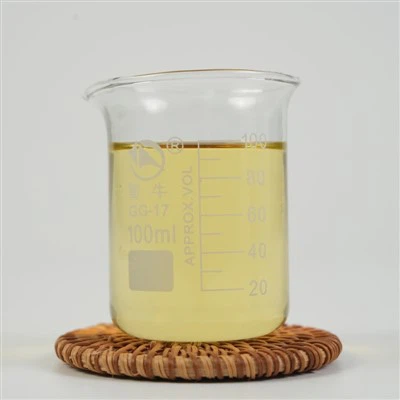
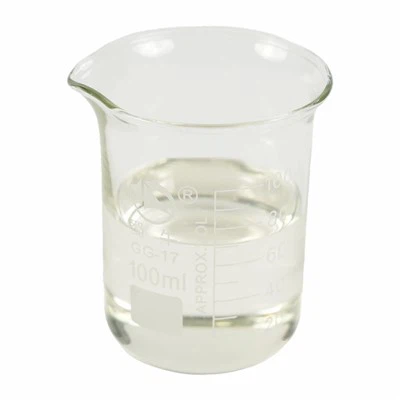
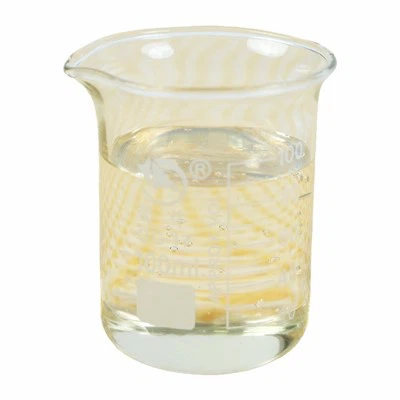
Clear, Colorless to pale yellow aqueous solution |
White crystal powder |
|
Active acid % |
50.0 min |
95.0 min |
|
Chloride (as Cl-)% |
1.0 max |
1.0 max |
|
PH (1% water solution) |
2.0 max |
2.0 max |
|
Fe, mg/L |
20.0 max |
20.0 max |
|
Density (20℃)g/cm3 |
1.30 min |
- |
Amino Shimethylene Phosphonic Acid
ATMP has excellent chelation, low threshold inhibition and lattice distortion ability. It can prevent scale formation, calcium carbonate in particular, in water system. ATMP has good chemical stability and is hard to be hydrolyzed in water system. At high concentration, it has good corrosion inhibition.ATMP is used in industrial circulating cool water system and oilfield water pipeline in fields of thermal power plant and oil refinery plant.
1-Hydroxyethylidene-1,1-Diphosphonic Acid
HEDP is an organophosphoric acid corrosion inhibitor. It can chelate with Fe, Cu, and Zn ions to form stable chelating compounds.It can dissolve the oxidized materials on these metals' surfaces. HEDP shows excellent scale and corrosion inhibition effects under temperature 250℃. HEDP has good chemical stability under high pH value, hard to be hydrolyzed, and hard to be decomposed under ordinary light and heat conditions. Its acid/alkali and chlorine oxidation tolerance are better than that of other organophosphoric acids (salt).


Ethylene Diamine Tetra (Methylene Phosphonic Acid)
EDTMPA is white crystal powder at room temperature, with melting point 215-217℃, hard to be dissolved in water, the solubility is less that 5% at room temperature, easy dissolved in ammonia. EDTMPA has strong metal ion chelating capacity, whose chelating constant with cuprum ion is larger than that of EDTA.EDTMPA is a high purity non-toxic reagent, with strong chelating ability for metal ions, which can be used in the electronics industry as cleaning agent for semiconductor chips of integrated circuits.
Polyamino Polyether Methylene Phosphonic Acid
PAPEMP is a new kind of water treatment agent. PAPEMP has high chelation and dispersion effects, high value of calcium tolerance, and good scale inhibition effects. PAPEMP can be used as scale and corrosion inhibitor in circulating cool water system and oilfield refill water system in situations of high hardness, high alkali and high pH value. PAPEMP has excellent scale inhibition ability to calcium carbonate, calcium sulfate and calcium phosphate. PAPEMP can efficiently inhibit the formation of silica scale, stabilize metal ions such as Zn, Mn and Fe.
Bis(Hexamethylene Triamine Penta (Methylene Phosphonic Acid)
BHMTPMP is a high-efficient chelating scale inhibitor, it has good effect to carbonate and sulfate scale. BHMTPMP has good water soluble properties and heat tolerance. BHMTPMP has high calcium ion tolerance in a wide pH ranges and temperature as high as 120℃.
Package and Storage
ATMP liquid:200L plastic drum,IBC(1000L),customers' requirement.
ATMP solid: 25kg/bag, customers' requirement. Storage for ten months in shady room and dry place.
Safety Protection: Acidity, Avoid contact with eye and skin, once contacted, flush with water.

FAQ
As one of the leading organic phosphonate scale and corrosion inhibitors manufacturers and suppliers in China, we warmly welcome you to buy discount organic phosphonate scale and corrosion inhibitors in stock here from our factory. If you have any enquiry about pricelist, please feel free to email us.
Bis Hexamethylene Triamine Penta Methylene Phosphonic Acid , 2 phosphono 1 2 4 butanetricarboxylic acid, Ethylene Diamine Tetra Methylene Phosphonic Acid